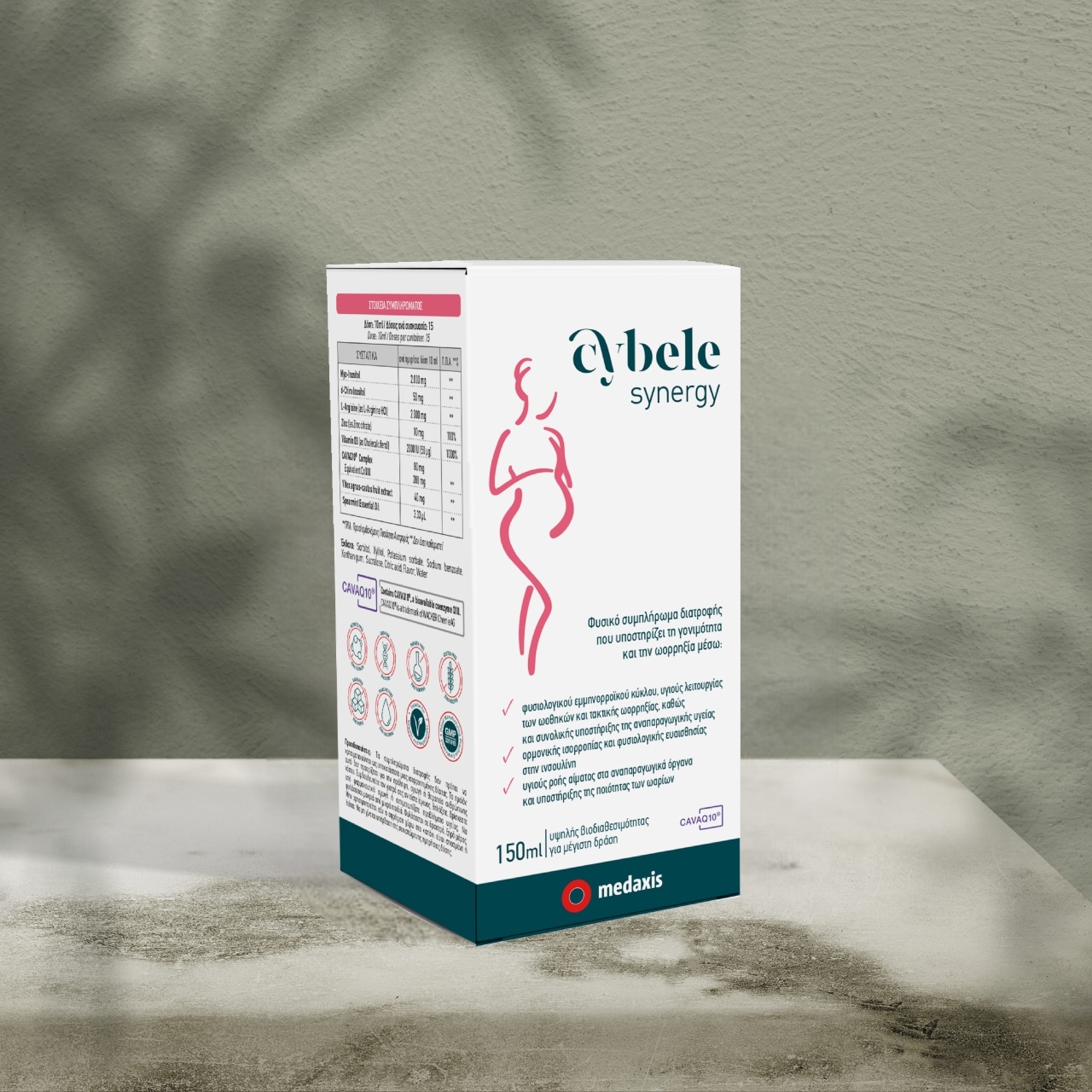
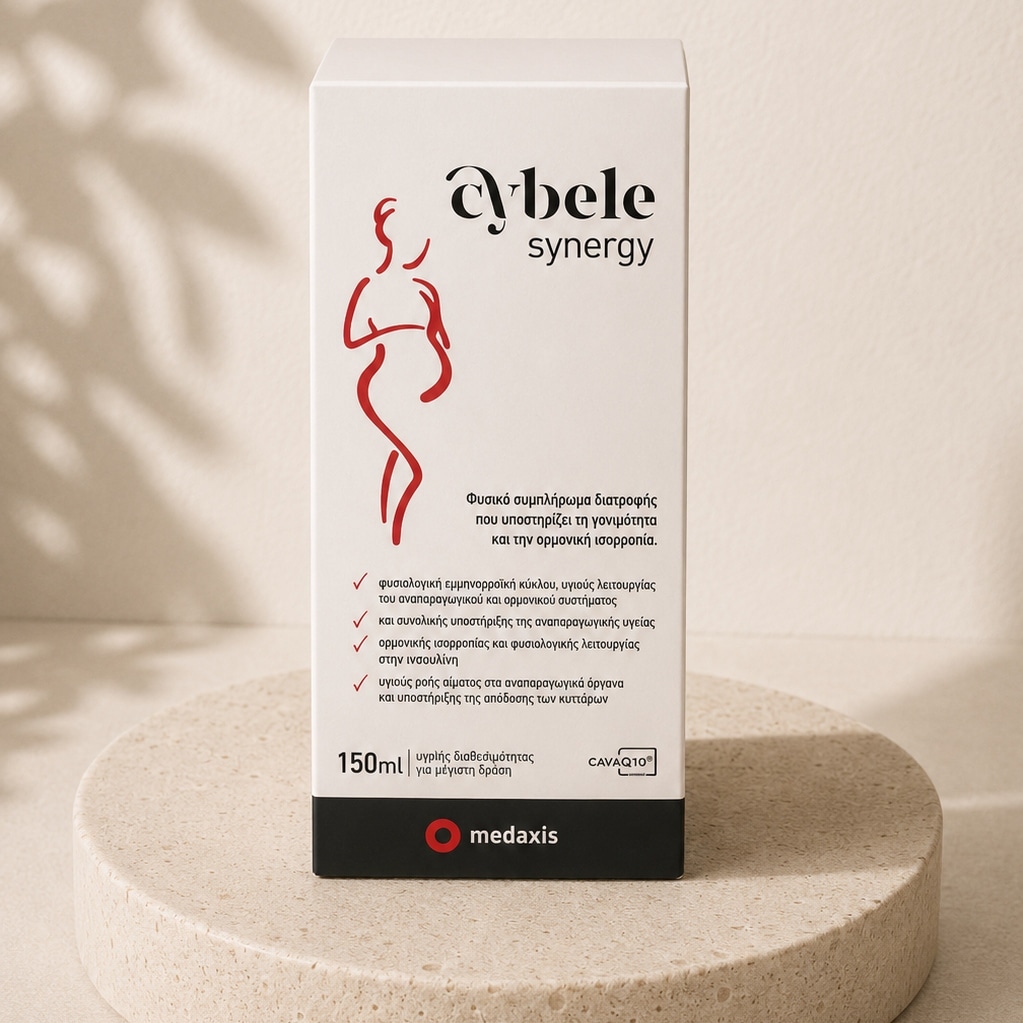
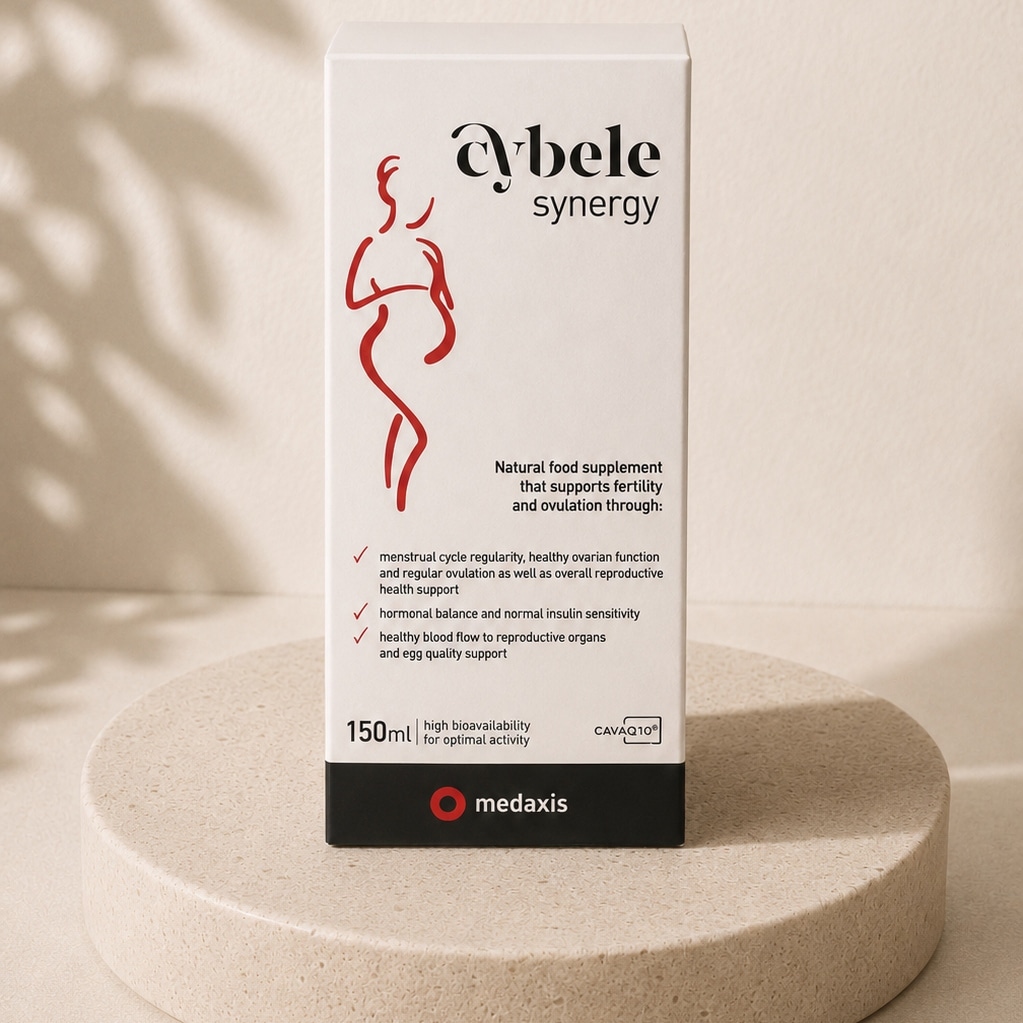
Cybele Synergy
A food supplement that supports fertility and ovulation through:
- A normal menstrual cycle, healthy ovarian function and regular ovulation, as well as overall support for reproductive health
- Hormonal balance and normal insulin sensitivity
- Healthy blood flow to the reproductive organs and support of the quality of the egg reservoire.
€30.00 inc VAT 5%
Inositol is a sugar found abundantly in the brain and other tissues in humans and mammals in general. Inositol and its derivatives, inositol phosphates (IPs), play an important role in signal transduction in metabolic pathways and neurotransmitter signaling, acting as secondary messengers. Of the nine inositol isomers, myo-inositol and D-chiro-inositol have the greatest biological contribution and the most extensive presence in the literature. Inositol has been investigated for its potential benefits in conditions such as Polyendocrine Metabolic Ovarian Syndrome (PMOS), until recently known as Polycystic Ovary Syndrome (PCOS), for the management of anxiety and depression symptoms, and for increasing insulin sensitivity and regulating glucose levels. Regarding the management of PMOS, promising findings include reports of increased menstrual cycle and ovulation frequency [1], reduced testosterone and androstenedione levels [2], and a reduction in the HOMA-IR insulin resistance index [3].
Arginine is often described as a semi-essential or conditionally essential amino acid: although it is synthesized in the body, dietary intake is indicated when requirements increase, such as during periods of increased stress or recovery from injury. Its physiological contribution involves participation in the urea cycle. It is also a precursor of nitric oxide (NO), thereby providing a vasodilatory effect. Low NO levels have also been associated with a range of conditions, including PMOS. In a relevant study, administration of L-arginine in combination with N-acetylcysteine (NAC) showed positive results, including a reduction in the HOMA index [4]. As part of ongoing research, publication of a targeted clinical study on the effect of L-arginine in PMOS is also awaited [5].
Vitex agnus-castus (chaste tree) has traditionally been used to relieve symptoms of premenstrual syndrome (PMS) and to manage mastalgia (breast tenderness and pain). It has also been scientifically investigated for potential antimicrobial, antioxidant, anti-inflammatory, antifungal and oestrogenic activity. It contains a wide range of chemical constituents, including essential oils, flavonoids, diterpenoids and phenolic compounds [6]. A systematic analysis of studies on the administration of Vitex agnus-castus for PMS and Pre-Menstrual Dysphoric Disorder (PMDD) found improved outcomes in groups receiving the extract compared with placebo-controlled groups [7]. The herb’s benefits have been associated with constituents that exhibit dopaminergic activity by binding to the D2 receptor, thereby inhibiting the release of prolactin, elevated levels of which are linked to menstrual disorders and mastalgia [8,9].
Vitamin D3 plays an important role in the normal functioning of the body, contributing to normal calcium and phosphorus absorption (EFSA Journal 2009;7(9):1227), the maintenance of normal bones (EFSA Journal 2009;7(9):1227) and muscles (EFSA Journal 2010;8(2):1468), and normal immune system function (EFSA Journal 2010;8(2):1468). Its deficiency [10] is particularly common in women with PMOS and is directly associated with worsening insulin resistance and hormonal disturbances. Studies [11,12] have shown that vitamin D3 can reduce androgen levels, such as testosterone, thereby contributing to hormone regulation. As part of ongoing research into PMOS management, a meta-analysis examined the effects of vitamin D3 on endocrine, metabolic and inflammatory markers. The main findings were an improvement in the HOMA-IR insulin resistance index, a reduction in high-sensitivity C-reactive protein (hs-CRP), and a reduction in total testosterone, while no noteworthy changes were observed in the other biomarkers assessed [13].
Coenzyme Q10 is a lipophilic compound found in the cells of the human body and plays a vital role both in cellular energy production and as a potent antioxidant [14]. The efficacy and safety of coenzyme Q10 supplementation for PMOS management were assessed in a recent systematic review and meta-analysis comprising nine randomized controlled trials involving 1,021 patients. Positive findings included improved HOMA-IR levels, balanced testosterone and follicle-stimulating hormone (FSH) levels, and improved blood lipid levels [15]. According to claims as presented by a relevant EFSA Panel, coenzyme Q10 (ubiquinone), among other functions, plays an important role in ATP (adenosine triphosphate) production to maintain health, contributes to normal blood pressure, helps protect against free radicals that are mainly responsible for cellular ageing, and supports energy production (EFSA Journal 2010;8(10):1793).
Zinc is one of the most important trace elements for humans, acting as a cofactor in the function of more than 300 enzymes that regulate metabolism, digestion and nervous system function. Health claims concerning zinc, as listed by EFSA, include its contribution to normal cognitive function, normal fertility and reproduction, and the maintenance of normal bones (EFSA Journal 2009;7(9):1229), as well as the maintenance of normal hair, nails and skin and normal testosterone levels in the blood (EFSA Journal 2010;8(10):181). Women with PMOS often have low zinc levels [16,17]. Among other functions, zinc acts as a natural inhibitor of 5-alpha-reductase, limiting the conversion of testosterone to dihydrotestosterone (DHT), a factor affecting hair health. A randomized, double-blind, placebo controlled clinical trial assessing the effects of zinc supplementation on endocrine outcomes, inflammatory biomarkers and oxidative stress in patients with PMOS found that taking 50 mg of elemental zinc daily for eight weeks significantly reduced hirsutism, hair loss and plasma malondialdehyde (MDA) levels in participants [18].
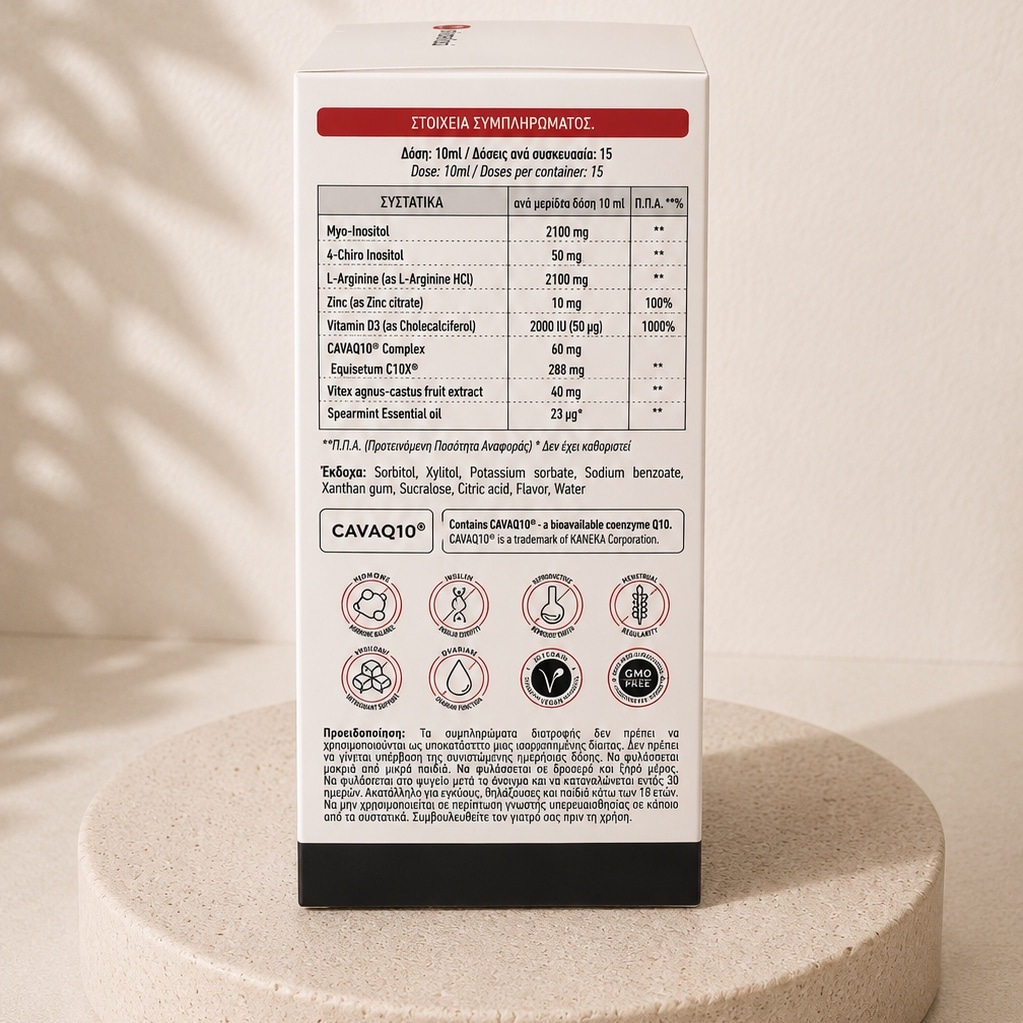
SUPPLEMENT FACTS
Dose: 10 ml / Doses per container: 15
| INGREDIENTS | per serving 10 ml | NRV **% |
| Myo-Inositol | 2100 mg | ** |
| d-Chiro Inositol | 50 mg | ** |
| L-Arginine (as L-Arginine HCl) | 2100 mg | ** |
| Zinc (as Zinc citrate) | 10 mg | 100% |
| Vitamin D3 (as Cholecalciferol) | 2000 IU (50 μg) | 1000% |
| CAVAQ10® Complex | 60 mg | ** |
| Equisetum C10X® | 288 mg | ** |
| Vitex agnus-castus fruit extract | 40 mg | ** |
| Spearmint essential oil | 23 μg* | ** |
**NRV (Nutrient Reference Value) * Not established
Dosage: Take a daily dose of 10 ml in a little juice or water, after a meal, or as directed by a healthcare professional.
Precautions: None. Suitable for vegans. Contains no sugar, yeast, salt, gluten, grains, dairy products or colorings.
Warnings: Food supplements should not be used as a substitute for a balanced diet. This product is not intended to prevent, treat or cure human disease. Consult your doctor if you are pregnant, breastfeeding, taking medication or have health problems. Keep out of reach of young children. Store in a cool, dry place. Do not use if the seal around the cap is broken or missing. Do not exceed the recommended daily dose.
Poison Control Centre telephone: 210 7793777
EOF Notification Number: 63182/19-5-2026
Manufactured in the EU (Greece). The product is not subject to a licensing procedure.

References
- Pundir J, Psaroudakis D, Savnur P, Bhide P, Sabatini L, Teede H, Coomarasamy A, Thangaratinam S. Inositol treatment of anovulation in women with polycystic ovary syndrome: a meta-analysis of randomised trials. BJOG. 2018 Feb;125(3):299-308. doi: 10.1111/1471-0528.14754. Epub 2017 Jul 14. PMID: 28544572.
- Greff D, Juhász AE, Váncsa S, Váradi A, Sipos Z, Szinte J, Park S, Hegyi P, Nyirády P, Ács N, Várbíró S, Horváth EM. Inositol is an effective and safe treatment in polycystic ovary syndrome: a systematic review and meta-analysis of randomized controlled trials. Reprod Biol Endocrinol. 2023 Jan 26;21(1):10. doi: 10.1186/s12958-023-01055-z. PMID: 36703143; PMCID: PMC9878965.
- Unfer, V., Carlomagno, G., Dante, G., & Facchinetti, F. (2012). Effects of myo-inositol in women with PCOS: a systematic review of randomized controlled trials. Gynecological Endocrinology, 28(7), 509–515. https://doi.org/10.3109/09513590.2011.650660
- Masha A, Manieri C, Dinatale S, Bruno GA, Ghigo E, Martina V. Prolonged treatment with N-acetylcysteine and L-arginine restores gonadal function in patients with polycystic ovary syndrome. J Endocrinol Invest. 2009 Dec;32(11):870-2. doi: 10.1007/BF03345763. Epub 2009 Apr 15. PMID: 19494711.
- https://clinicaltrials.gov/study/NCT06728644?tab=study#study-plan
- Niroumand, Mina Cheraghi et al. “Pharmacological and therapeutic effects of Vitex agnus-castus L.: A review.” Pharmacognosy Reviews 12 (2018): 103 - 114.
- Cerqueira RO, Frey BN, Leclerc E, Brietzke E. Vitex agnus castus for premenstrual syndrome and premenstrual dysphoric disorder: a systematic review. Arch Womens Ment Health. 2017 Dec;20(6):713-719. doi: 10.1007/s00737-017-0791-0. Epub 2017 Oct 23. PMID: 29063202.
- Kulkarni, kala. “Vitex Agnus Castus -An Overview.” Journal of Natural Remedies, 2011.
- Vitamin D deficiency and polycystic ovary syndrome: an opinion and positioning article. Volume 12 - 2025 | https://doi.org/10.3389/fnut.2025.1602472
- The relationship between vitamin D3 and insulin in polycystic ovary syndrome - a critical review. K. Kaminska, m. Grzesiak / Department of Endocrinology, Institute of Zoology and Biomedical Research, Jagiellonian University in Cracow, Cracow, Poland. DOI: 10.26402/jpp.2021.1.02
- Effects of Vitamin D3 Treatment on Polycystic Ovary Symptoms: A Prospective Double-Blind Two-Phase Randomized Controlled Clinical Trial / Nutrients 2025, 17(7), 1246; https://doi.org/10.3390/nu17071246. Bela E. Toth, Istvan Takacs, Zsuzsanna Valkusz, Attila Jakab, Zsanett Fulop, Kristof Kadar, Zsuzsanna Putz, Peter Lakatos
- A meta-analysis of the effects of vitamin D supplementation on endocrine metabolic and inflammatory markers in patients with polycystic ovarian syndrome / Wu, Baohua Yao, Jun MS.
- Exploring the protective effects of coenzyme Q10 on female fertility. Yu Jiang, Yao Han, Pengyun Qiao, Fa Ren Front Cell Dev Biol. 2025 Aug 29
- Efficacy and Safety of Coenzyme Q10 Supplementation in the Treatment of Polycystic Ovary Syndrome: a Systematic Review and Meta-analysis. Volume 30, pp. 1033–1048, (2023) Tianqing Zhang, Qi He, Hao Xiu, ZiZhu Zhang, Yao Liu, Zhenrong Chen & Hengjing Hu. https://doi.org/10.1007/s43032-022-01038-2
- Serum Zinc Levels in Women with Polycystic Ovarian Syndrome are Lower as Compared to Those without Polycystic Ovarian Syndrome: A Cohort Study. Journal of Human Reproductive Sciences 17(1):p 25-32, Jan–Mar 2024. Dhar Swati , Yadav Reen, Tomar Akash. DOI: 10.4103/jhrs.jhrs_8_24.
- Serum Trace Elements in Patients With Polycystic Ovary Syndrome: A Systematic Review and Meta-Analysis
- Volume 11 - 2020 |https://doi.org/10.3389/fendo.2020.572384 / Jiechen Yin, Xiang Hong, Ma Jun, Yuanqing Bu, Ran Liu.
- Effects of Zinc Supplementation on Endocrine Outcomes in Women with Polycystic Ovary Syndrome: a Randomized, Double-Blind, Placebo-Controlled Trial / Volume 170, pages 271–278, (2016) / https://doi.org/10.1007/s12011-015-0480-7/ Mehri Jamilian, Fatemeh Foroozanfard, Fereshteh Bahmani, Rezvan Talaee, Mahshid Monavari & Zatollah Asemi